
Building Management System (BMS): Smart Building Automation, HVAC Control, Lighting Control
A Building Management System (BMS) is a sophisticated, computer-based control network installed to monitor and manage a facility's mechanical and electrical equipment. ProAct Technology Egypt specializes in deploying these advanced solutions to integrate HVAC, lighting, and power systems into a single, cohesive interface. By utilizing Direct Digital Control (DDC) and industry-standard protocols like BACnet, Modbus, and LonWorks, their systems ensure seamless communication between hardware and software. These platforms are essential for achieving high Energy Efficiency, monitoring Indoor Air Quality, and implementing automated Smart Building strategies. In terms of types, systems generally fall into three categories: Legacy Systems, which use proprietary, standalone hardware; Open Protocol Systems, which allow diverse brands to interact; and modern Cloud-Based/IoT BMS, which provide remote access and Data Analytics. ProAct Technology Egypt focuses on these scalable architectures to enhance operational longevity and occupant comfort. Through real-time monitoring and Preventive Maintenance alerts, a well-implemented BMS transforms a static structure into an intelligent, responsive environment.
Anonymous
4/20/20263 min read
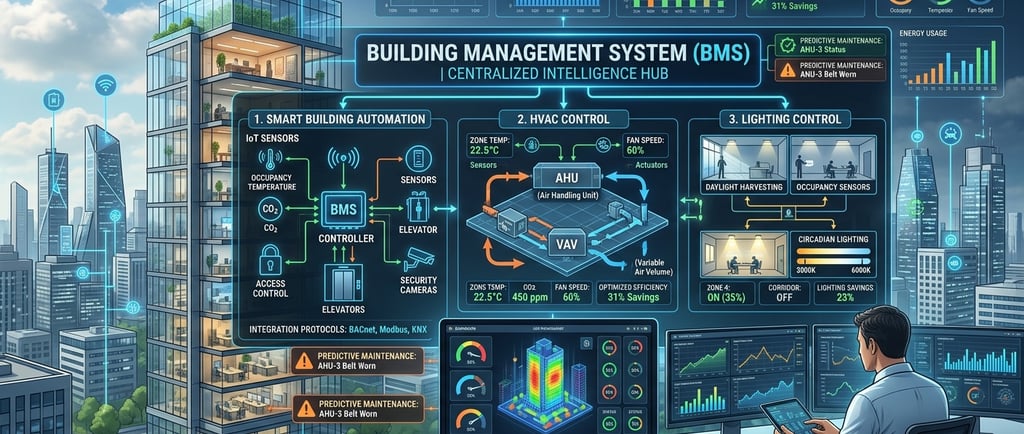
In the era of smart infrastructure, effective BMS control is the differentiator between a high-performing facility and an operational cost burden. A Building Management System (BMS) acts as the brain of a structure, coordinating complex mechanical and electrical systems to ensure occupant comfort and energy efficiency.
Central to this architecture are the control systems and physical panels that manage everything from boilers to air handling units. However, as building requirements evolve, traditional methods are being challenged by more agile, interoperable technologies. This guide explores the essentials of BMS control systems and how modern IoT solutions are redefining the plant room.
Understanding BMS Control Systems
A BMS control system is a computer-based network installed in buildings to monitor and manage technical equipment. By automating the regulation of critical utilities, these systems allow facility managers to maintain setpoints without manual intervention, ensuring that energy is only consumed when and where it is needed.
BMS Panel Meaning and Core Functions
When discussing building automation, the BMS panel meaning refers to the physical enclosure that houses the hardware responsible for localised control. While the software provides the interface, the bms panel is the "on-the-ground" hub where electrical signals from sensors are processed and commands are sent to machinery.
The core function of a bms control panel is to act as a centralised termination point for field wiring. It receives data from temperature, pressure, and CO2 sensors, processes that information through pre-programmed logic, and triggers actuators—such as opening a valve or starting a fan—to maintain the desired indoor environment.
Key Components of a BMS Control Panel
Inside typical bms panels, you will find a sophisticated array of digital and physical components working in unison:
Controllers: The microprocessor "brain" that runs the automation logic.
I/O Modules (Input/Output): Interfaces that convert physical signals (like a thermistor reading) into digital data and vice-versa.
Power Supplies: Transformers that provide stable low-voltage power to the electronics.
Relays and Contactors: Physical switches that allow the low-voltage controller to start high-voltage motors or pumps.
Communication Ports: Interfaces for protocols like BACnet or Modbus to share data with the wider network.
The Role of BMS Control in HVAC and Automation
The primary application for a bms control system is HVAC regulation. Heating, ventilation, and air conditioning are the most energy-intensive aspects of any building. By using a bms control panel to manage these assets, managers can implement sophisticated strategies like weather compensation or demand-controlled ventilation.
Beyond HVAC, bms control extends to lighting, water monitoring, and life safety systems. By unifying these functions, the building can respond dynamically to its environment—for example, dimming lights in areas with high natural solar gain or increasing fresh air intake when CO2 levels rise in a crowded meeting room.
The Evolution from Legacy BMS Panels to Smart IoT
The traditional bms panel was designed as a closed loop. While highly reliable for its specific tasks, it was rarely built with external connectivity or cross-brand compatibility in mind. This has created a significant "technical debt" in many existing properties.
Challenges with Traditional BMS Panels
Siloed Data: Information trapped within a single panel cannot be easily shared with other systems or cloud analytics tools.
Lack of Interoperability: Getting a panel from one manufacturer to "talk" to a chiller from another often required expensive, custom-coded gateways.
High Installation Costs: Hard-wiring every single sensor back to a central bms control panel is labor-intensive and expensive, especially in retrofit projects.
The Shift Toward Interoperable BMS Control Systems.
Modern building requirements demand more flexibility. Building owners now seek Smart Buildings that can adapt to changing occupancy patterns and strict energy regulations. This has led to a shift away from proprietary, hard-wired systems toward interoperable bms control systems.
Today’s standard is the integration of diverse protocols. A modern setup must be able to ingest data from wireless LoRaWAN sensors, communicate over BACnet or Modbus, and push data to the cloud via MQTT. This agility allows for a more granular approach to management without the need for massive infrastructure overhauls.
At Proact, your success is our purpose
© 2025. All rights reserved.
Contact
Phone: +201031314664
Email: sales@prosys-eg.com
Address: Mokattam, Cairo, Egypt